Every bank receives complaints through many channels, and each one has to be logged, categorised, routed to the right team and handled within a deadline. Categorising them by hand is slow and inconsistent; sending them to a cloud model raises an obvious question about customer data. A small model running on the bank's own network answers both, provided it is tested properly and knows when to hand a case on.
The task
Kestrel Bay, a fictional regional bank, wants each incoming complaint labelled with a category (fees, fraud and disputes, lending, account access, service), the product, an urgency, and a flag for signs of a vulnerable customer. The label decides the queue; the case handler still owns the response.
Why the sensitive-data gate matters here
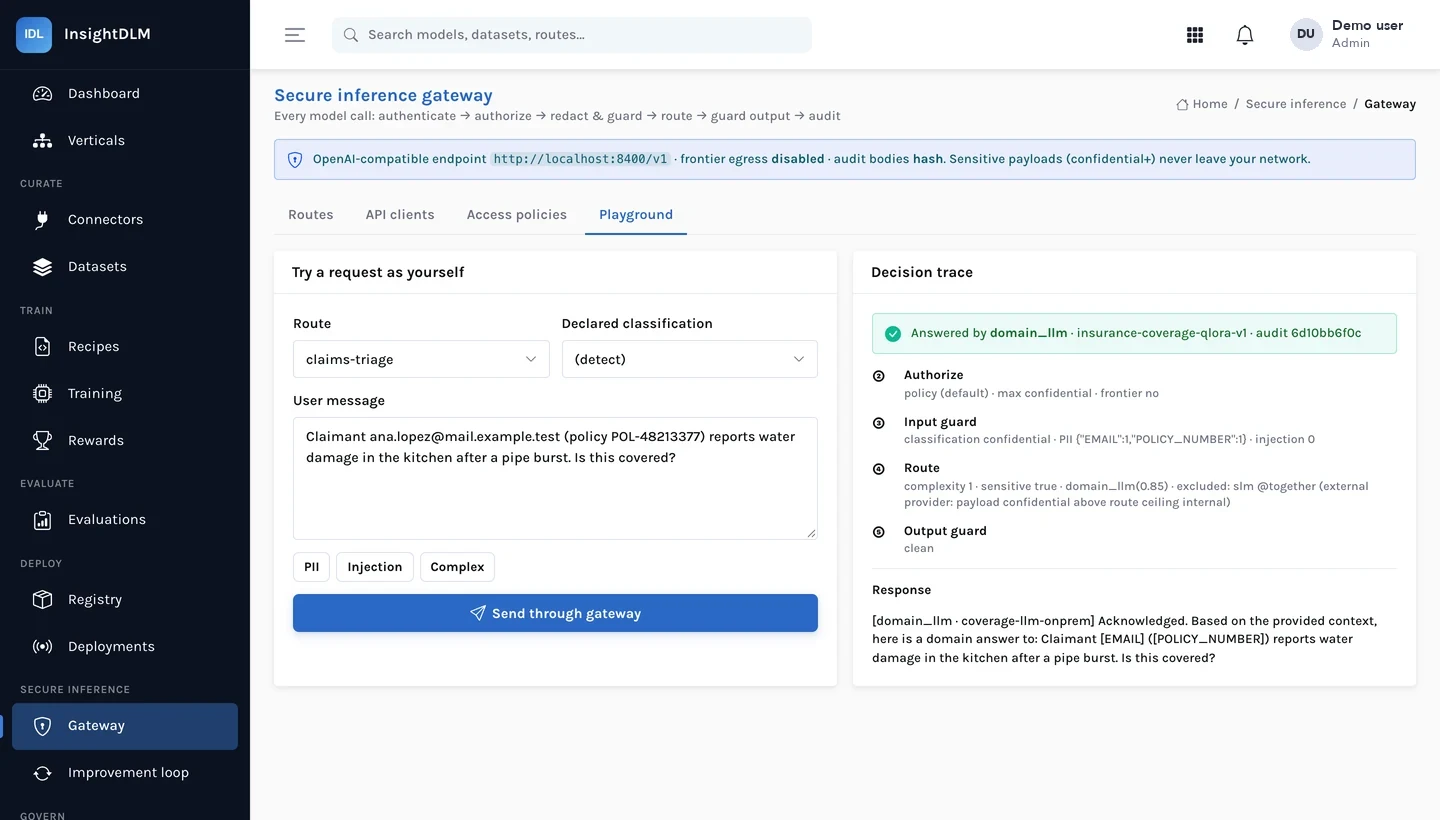
InsightDLM's router walks the tiers from cheapest to most capable and skips the frontier tier for a request flagged sensitive. For complaints, which almost always contain names, account details and personal circumstances, the intent is that the model farm answers entirely on-network: the complaint SLM for routine cases, a larger domain model for the more complex ones. The secure inference gateway enforces that: a complaint classified confidential or restricted cannot be routed to the frontier tier at all, and a low-confidence case escalates one tier, to the larger on-network model. Account and card numbers are redacted by the PII guardrail before either sees them.
Data and labels
The bank's complaint history lives in its case-management database (PostgreSQL) and its procedures in Confluence, both of which InsightDLM can sync. The team generates labelled examples from a sample of past complaints, and a complaints specialist reviews every one. Classification is the task where balance matters most: the guide's starting point is 500 to 2,000 examples, balanced across classes, so the rare but important categories (fraud, vulnerability) are not drowned out by fee complaints.
The one step that needs a separate decision: generation
Serving on the bank's network is the design. Building the dataset is different: in the default configuration, generation sends the prompt, the extra context and the selected sample of source items to a teacher model (Claude, through the Anthropic API or through Amazon Bedrock in the bank's AWS account), and the context is not redacted first. For complaint data that needs its own decision, made with the bank's data-protection and outsourcing owners. The options Kestrel Bay weighs, in the made-up example:
| Option | Trade-off |
|---|---|
| Generate through Bedrock in the bank's own AWS account | Fastest; acceptable only if the bank's cloud and data agreements already cover customer data there |
| Generate from complaints the bank has already anonymised with its own tooling | Keeps raw data out; the anonymisation has to be good enough that the examples stay realistic |
| Have specialists write seed examples, and generate only from procedures | No customer data leaves; slower, and the examples need careful balancing |
Kestrel Bay chooses the second for complaint text and the first for its Confluence procedures, and writes the decision into the project description so it is on record next to the datasets it produced.
Testing what matters to a regulator
| Suite | What it covers |
|---|---|
domain_qa | Category, product and urgency on held-out complaints, balanced by category |
custom · vulnerability | Hand-written cases with and without signs of vulnerability; misses are the costly error |
safety | Requests to disclose account data, or to give advice the bank does not give |
regression | Complaints the production version classified correctly |
The team reads each failed case before each promotion. A version that is better on average but misses more vulnerability cases is not promoted. The registry keeps the evaluation behind every decision, so the model risk team can see why version 4 replaced version 3.
Watching it in service
Two numbers on the deployment matter week to week. Fallthrough (the share escalated past Tier 1) rising for one category says the SLM needs more examples there. Label changes by case handlers, logged by the bank's own case system, say where the model is wrong with confidence, which is the more dangerous failure. Both feed the next dataset version.
A new product, a new kind of complaint
When the fictional bank launches a buy-now-pay-later product, complaints about it start arriving with no category that fits. The SLM's confidence on them is low, so they fall through, and the fallthrough rate for lending climbs within a week. The team adds a category, generates and reviews examples from the first few hundred cases, trains a new version, and promotes it only after it passes the regression suite. Meanwhile, those low-confidence complaints escalate to the bank's Tier 2 model and are captured, redacted, as candidates for exactly that training round.
What the model risk team can read, and where
| Question a validator asks | Where the answer is |
|---|---|
| What was it trained on? | The dataset version, its connectors and selected items, and each record's review decision and reviewer |
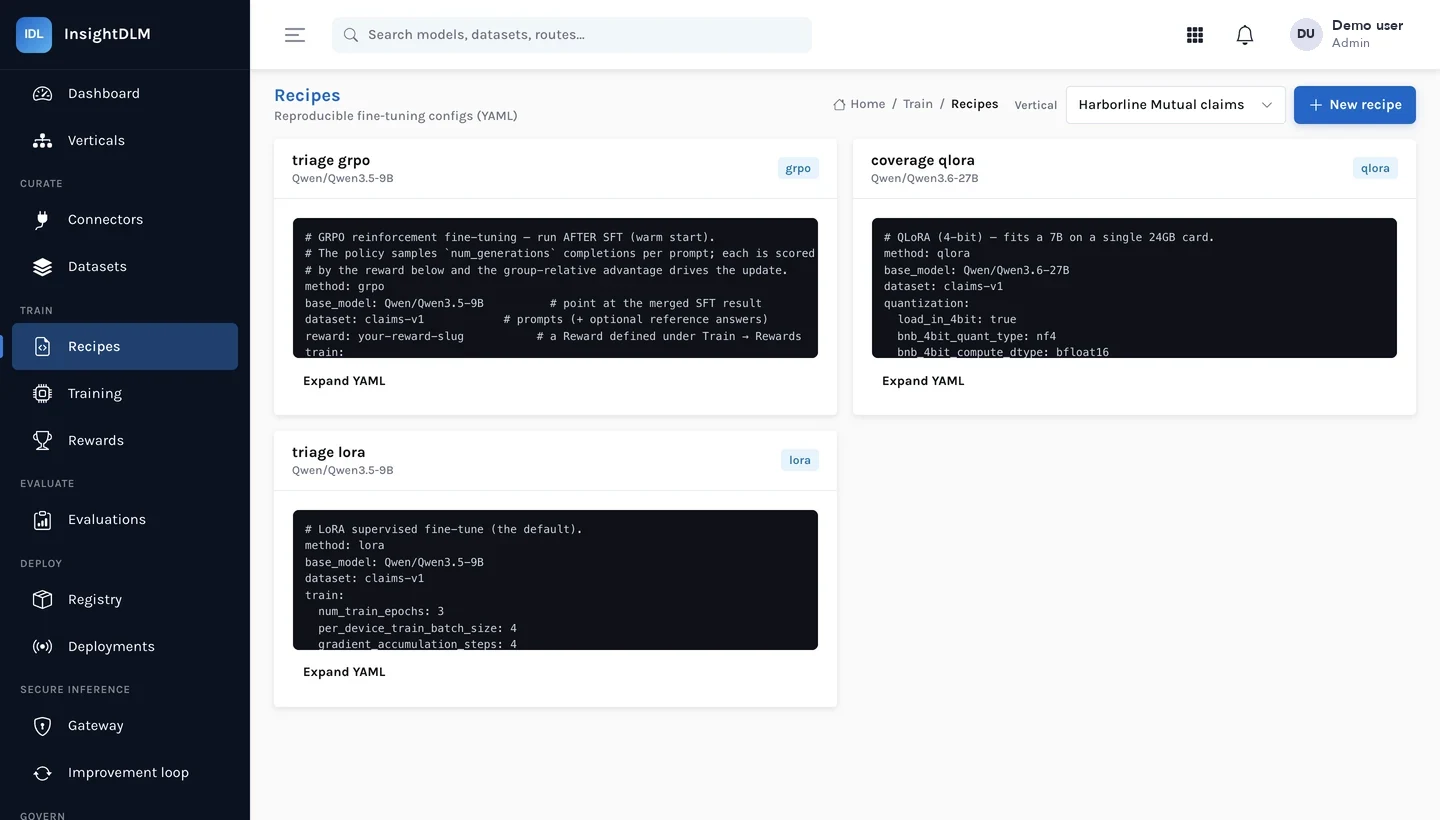
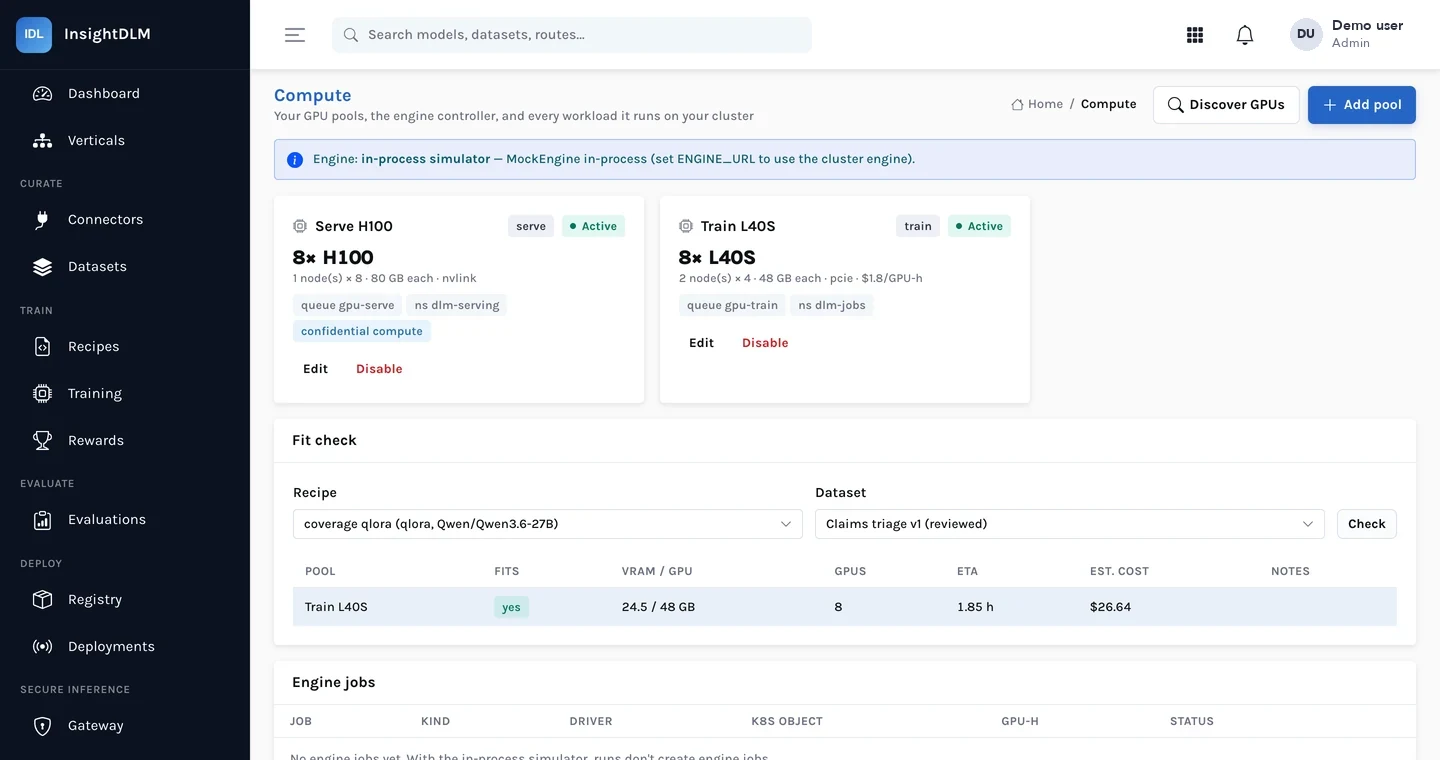
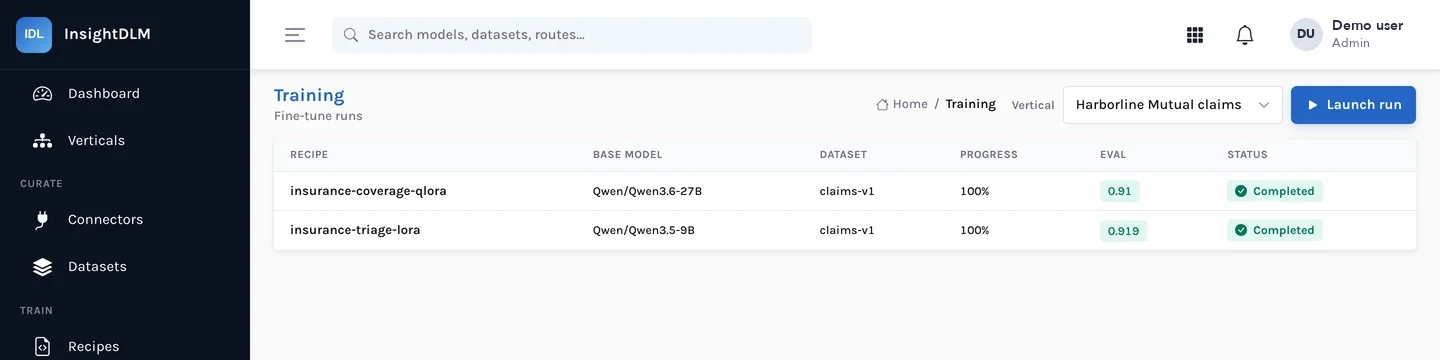
| How was it trained? | The recipe YAML and the run: base model, method, hyperparameters, curves, hardware |
| How was it tested? | Each evaluation, with every case, the expected answer, the model's answer and the judge's rationale |
| What is it for, and not for? | The model card on the version |
| How did it get here? | The project's lineage graph, from connectors to the deployment |
Who promoted which version, when, against which gate results and with what comment, is in the approval record and the hash-chained audit trail. One thing the bank keeps itself: the label-change data from its case system, which shows how often handlers overrode the model. Validators usually want both.
Could the same model draft the reply to the customer?
It could be trained to, but it would be a different task with a different risk: a label a case handler confirms is cheap to get wrong, a sentence sent to a customer is not. Kestrel Bay keeps the model to labels and routing, and treats reply drafting as a separate project with its own dataset, suite and sign-off, if it ever starts one.